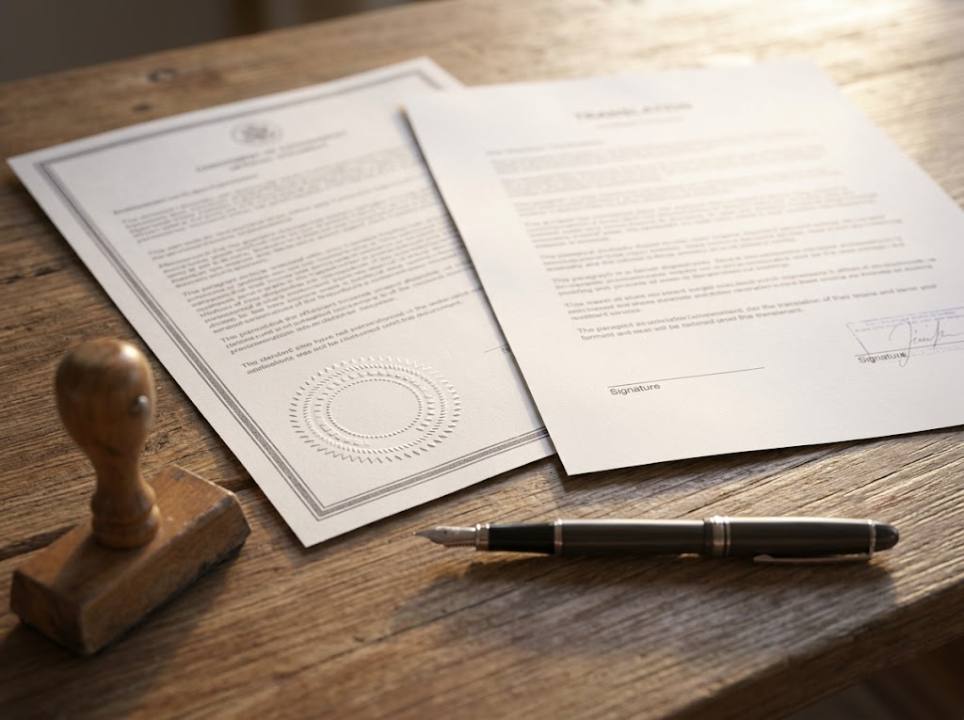
Formatting Certified Translations So Officials Accept Them
- June 16, 2026· Article by Maria Jones
- Languages , certified translation services
Most people think a certified translation is accepted or rejected because of its wording. In reality, many rejections have nothing to do with language. A missing stamp description, a page that does not match the original, an unreadable seal or a certificate statement on a separate loose page can all send an application back to the start.
For official documents, layout is part of accuracy. This article explains how certified translations should be formatted so that registries, embassies, universities and courts can check them quickly and accept them.
Why Officials Care About Layout
An official reviewing a translated document usually has the original next to it. They need to find each element of the original in the translation within seconds: the name, the date, the reference number, the stamp, the signature. If the translation is laid out completely differently, that check takes longer and doubts creep in.
A good certified translation mirrors the structure of the original so closely that a reviewer can compare them line by line.
Mirror the Original Structure
Professional certified translation services follow a few standard practices:
- Keep headings, tables and fields in the same order as the original.
- Reproduce boxes and columns where the original uses them.
- Translate every visible element, including printed form labels.
- Keep numbers, dates and reference codes exactly as they appear.
- Use the same number of pages where practical.
This does not mean copying the graphic design. A clean, readable layout that follows the same logic is enough.
Describing Stamps, Seals and Signatures
Stamps and signatures cannot be translated in the usual sense, so translators describe them. A typical note reads: [Round stamp: Civil Registry Office, Bucharest] or [Signature illegible]. These notes should appear in the same position as the element on the original page.
Handwritten additions, corrections and marginal notes are also translated or described. Skipping them is one of the most common reasons for rejection.
Personal Documents Need Particular Care
Civil status documents are among the most frequently translated. A birth certificate translation must show names exactly as written in the passport, with any transliteration explained. Older certificates may contain handwritten entries, faded stamps or outdated administrative names that need a short translator's note.
The same applies to marriage certificate translation, often needed for visa applications, name changes and spouse residence permits. Here the dates, places and the names of both spouses and witnesses must match the original perfectly, because officials cross-check them against other documents in the file.
The Certification Statement
In the UK, a certified translation normally includes a signed statement confirming that it is a true and accurate translation of the original, along with the translator's or company's name, contact details and the date. The UK government explains on its page about certifying a document what is generally expected when copies and translations are submitted.
The statement should be attached to the translation in a way that makes clear which document it covers. Many providers add a page reference, the document title and the total number of pages.
Digital or Paper
More authorities now accept PDF translations sent by email or uploaded to a portal. Others still require a signed paper copy, sometimes with the original or a certified copy attached. Before ordering, check which format the receiving body wants. A digital file can usually be printed later, but a paper-only translation cannot always be accepted online.
Practical tips for digital submission
- Scan originals in colour at a readable resolution.
- Combine the original and translation into one PDF if the portal allows only one upload.
- Name files clearly, for example by document type and applicant name.
Spelling of Names
Names cause more problems than any other element. Different alphabets, accents and transliteration systems produce several possible spellings. The safest rule is to follow the spelling in the applicant's passport and add a note if the original document uses a different version.
Always send a passport copy with the order. It saves a round of corrections and protects the applicant from inconsistent records.
A Simple Pre-Submission Check
Before submitting, compare the translation with the original page by page. Check that every stamp is described, every date is correct, every name matches the passport and the certificate statement is signed and dated. Five minutes of checking can save weeks of delay.
Multi-Page and Bilingual Originals
Some originals are already partly bilingual, such as international certificates or EU forms. In these cases the translator usually translates only the parts in the foreign language and notes that the remaining text appears in English in the original. Multi-page documents should carry page numbers in the translation that match the original, for example "Page 2 of 4", so no page can be lost or swapped without someone noticing.
If an apostille or legalisation stamp is attached, it should be translated too, in the order in which it appears. Officials often reject files where the apostille was left out because it was on a separate sheet.
Final Thoughts
Certified translations sit at the meeting point of language and administration. When the layout mirrors the original, the stamps are described clearly and the certification is complete, officials can approve the document quickly. That is what applicants need most: a translation that simply works the first time.